
How to save lucky bamboo from root rot?
Learn how to save lucky bamboo from root rot with expert tips on pruning, repotting, watering, and care to revive your plant effectively.
Lucky bamboo (Dracaena sanderiana), a popular houseplant cherished for its elegant stalks and symbolic significance in Feng Shui, brings a touch of nature and positive energy to homes and offices. Native to Africa, this resilient plant is often grown in water or soil, making it adaptable to various environments. Despite its low-maintenance reputation, lucky bamboo can suffer from issues like root rot, yellowing leaves, or wilting if its care needs are not met. Root rot, in particular, is a common problem that can quickly jeopardize the plant’s health if not addressed promptly.
This guide provides a detailed, step-by-step approach to saving lucky bamboo from root rot, based on expert insights and practical solutions. Whether your plant is grown in water or soil, we’ll cover how to identify the problem, treat root rot, and implement long-term care strategies to restore your lucky bamboo to its vibrant state. With actionable advice, troubleshooting tips, and preventive measures, you’ll be equipped to revive your plant and maintain its health for years to come.
Understanding Lucky Bamboo and Root Rot
Lucky bamboo is not true bamboo but a member of the Dracaena family, known for its hardiness and ability to thrive in low-light conditions. It’s often grown in water with pebbles or in soil, making it a versatile choice for indoor spaces. However, its susceptibility to root rot—a condition caused by excessive moisture and poor drainage—can lead to severe damage if not addressed.
Root rot occurs when the plant’s roots are exposed to prolonged moisture, leading to fungal or bacterial infections. The roots become mushy, discolored, and foul-smelling, impairing the plant’s ability to absorb water and nutrients. This condition often stems from overwatering, poor water quality, or stagnant water in water-based setups. Recognizing the signs early is critical to saving your lucky bamboo.
Signs of Root Rot and Other Issues
Before treating root rot, it’s essential to confirm it as the cause of your plant’s decline. Here are the key symptoms to look for:
- Mushy, Dark Roots: Healthy roots are firm and white or light-colored. Root rot causes roots to turn brown, black, or slimy, often with a foul odor.
- Yellowing Leaves or Stalks: Yellowing is a common stress signal, often linked to overwatering, poor water quality, or excessive light.
- Wilting or Drooping: This indicates insufficient water, light, or nutrient uptake, sometimes exacerbated by root damage.
- Cloudy Water: In water-based setups, murky or foul-smelling water suggests bacterial growth, contributing to root rot.
- Brown Leaf Tips: These can result from chemical buildup (e.g., chlorine or fluoride in tap water) or low humidity.
By examining your plant closely, you can pinpoint whether root rot or another issue, such as overwatering or improper lighting, is the culprit.
Step-by-Step Guide to Saving Lucky Bamboo from Root Rot
Reviving a lucky bamboo plant with root rot requires prompt action and careful adjustments to its care routine. Follow these steps to address the problem and restore your plant’s health.
1. Diagnose the Problem
Begin by inspecting the plant thoroughly:
- Check the Roots: Remove the plant from its pot or water container. Healthy roots are firm and white; rotten roots are soft, brown, or black.
- Examine the Stalks: Yellow or mushy stalks indicate advanced rot, while green stalks may still be salvageable.
- Assess Water Quality: For water-grown plants, cloudy or stagnant water is a red flag. For soil-grown plants, soggy soil suggests overwatering.
If root rot is confirmed, act quickly to prevent further damage.
2. Prune Affected Areas
Pruning is critical to stop the spread of rot and encourage healthy growth:
- Tools Needed: Use clean, sharp scissors or pruning shears, sterilized with rubbing alcohol to prevent introducing pathogens.
- Trim Rotten Roots: Cut away all mushy, discolored roots, leaving only firm, white ones. If most roots are affected, trim back to healthy tissue.
- Remove Yellowing Leaves: Snip off yellow or dead leaves close to the stem to improve appearance and prevent decay.
- Cut Damaged Stalks: If a stalk is yellow or mushy, cut above the affected area, ensuring the remaining portion is green and firm. Dispose of rotten sections to avoid contamination.
Tip: If the entire stalk is yellow or brown, it may be beyond saving. However, you can try propagating healthy sections (see propagation section below).
3. Repot or Reset the Plant
Depending on whether your lucky bamboo is grown in water or soil, take the following steps:
For Water-Grown Lucky Bamboo
- Clean the Container: Wash the pot or vase thoroughly with soap and water to remove bacteria or fungi. Rinse pebbles or decorative rocks and sterilize them by soaking in a 1:10 bleach-to-water solution.
- Use Fresh Water: Replace tap water with filtered or distilled water to avoid chlorine or fluoride buildup, which can harm the plant.
- Position the Plant: Ensure the roots are fully submerged in water, but keep the stalks above the waterline to prevent rot. Secure the plant with clean pebbles if needed.
- Change Water Regularly: Refresh the water every 7–10 days to prevent stagnation and bacterial growth.
For Soil-Grown Lucky Bamboo
- Choose a Well-Draining Potting Mix: Use a blend of peat moss, perlite, and coarse sand for optimal drainage. Avoid heavy, water-retaining soils.
- Select a Suitable Pot: Ensure the pot has drainage holes to prevent water accumulation.
- Repot the Plant: Place the pruned plant in the new pot, covering the roots with soil. Water lightly to settle the soil, ensuring it’s moist but not soggy.
- Adjust Watering: Allow the top inch of soil to dry out between waterings to prevent future root rot.
4. Optimize Light Conditions
Lucky bamboo thrives in bright, indirect light. Incorrect lighting can exacerbate stress and contribute to root rot recovery challenges:
- Ideal Placement: Position the plant near a window with sheer curtains or in a room with reflected light. Avoid direct sunlight, which can scorch leaves and cause yellowing.
- Artificial Lighting: If natural light is limited, use LED grow lights with a spectrum suitable for houseplants (e.g., 4000–6000K). Place the light 12–18 inches above the plant for 10–12 hours daily to mimic natural conditions.
- Monitor Light Exposure: If leaves turn pale or yellow, move the plant to a brighter spot. If leaves show brown, scorched tips, reduce light intensity.
5. Adjust Watering Practices
Proper watering is crucial to prevent recurrent root rot:
- Water-Grown Plants: Maintain a water level that covers the roots but not the stalks. Change the water weekly and rinse the roots and container to remove debris.
- Soil-Grown Plants: Water when the top inch of soil feels dry. Ensure excess water drains away to avoid waterlogging.
- Water Quality: Always use filtered or distilled water to prevent chemical buildup, which can stress the plant.
6. Fertilize Sparingly
Lucky bamboo requires minimal fertilization, but nutrients can support recovery:
- Fertilizer Type: Use a balanced liquid fertilizer (20-20-20) diluted to half strength to avoid nutrient burn.
- Frequency: Apply fertilizer once a month during spring and summer. Skip fertilization in fall and winter when the plant is dormant.
- Application: For water-grown plants, add a few drops of diluted fertilizer to the water. For soil-grown plants, apply to the soil during watering.
7. Maintain Temperature and Humidity
Lucky bamboo prefers warm, stable conditions:
- Temperature: Keep the plant in a range of 65°F to 90°F (18°C to 32°C). Avoid drafts, air conditioners, or heating vents.
- Humidity: Lucky bamboo tolerates average indoor humidity but thrives in higher humidity (40–60%). Use a humidity tray or plant humidifier in dry environments to prevent brown leaf tips.
8. Address Pests
Pests can weaken a plant already stressed by root rot. Common pests include:
- Fungus Gnats: Small flies around the soil or water, often caused by overwatering.
- Mealybugs: White, cottony pests on stalks or leaves.
- Spider Mites: Tiny pests causing webbing or speckled leaves.
- Scale Insects: Small, hard-shelled pests on stalks.
- Thrips: Tiny, slender insects causing silvery leaf patches.
Treatment:
- Wipe off visible pests with a damp cloth.
- Spray the plant with neem oil or insecticidal soap, ensuring thorough coverage of leaves and stalks.
- Monitor weekly to prevent reinfestation.
9. Propagate Healthy Sections (Optional)
If significant portions of the plant are unsalvageable, propagate healthy cuttings to start anew:
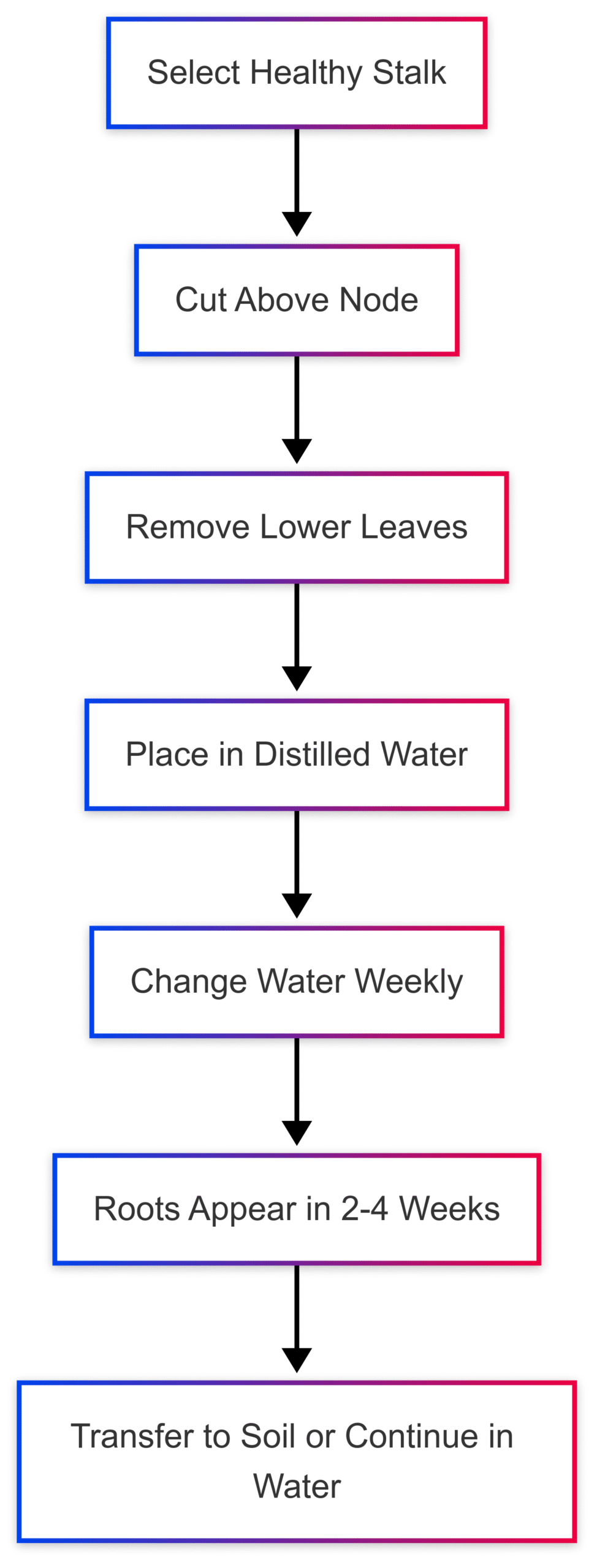
- Select a Healthy Stalk: Choose a green, firm stalk with at least one node (the raised ring on the stalk).
- Cut and Prepare: Use sterilized scissors to cut a 4–6-inch section above a node. Remove lower leaves, leaving a few at the top.
- Root in Water: Place the cutting in a container with distilled water, ensuring the node is submerged. Change the water weekly.
- Monitor Growth: Roots should appear within 2–4 weeks. Once roots are 2 inches long, transfer to soil or continue growing in water.
Chart: Lucky Bamboo Propagation Process
Preventive Care to Avoid Future Root Rot
Once your lucky bamboo is on the path to recovery, adopt these practices to maintain its health:
- Regular Water Changes: For water-grown plants, refresh water every 7–10 days and clean the container monthly.
- Monitor Soil Moisture: For soil-grown plants, check soil moisture weekly and water only when needed.
- Inspect Regularly: Check for yellowing leaves, mushy roots, or cloudy water to catch issues early.
- Prune Proactively: Trim dead or yellowing leaves promptly to maintain plant vigor.
- Maintain Stable Conditions: Keep the plant in a consistent environment with appropriate light, temperature, and humidity.
Table: Lucky Bamboo Care Requirements
| Aspect | Requirement |
|---|---|
| Light | Bright, indirect light; avoid direct sunlight |
| Water | Distilled or filtered water; change weekly (water-grown); moist soil (soil-grown) |
| Temperature | 65°F–90°F (18°C–32°C); avoid drafts |
| Humidity | 40–60%; use humidity tray if needed |
| Fertilizer | Balanced 20-20-20, half-strength, monthly in spring/summer |
| Soil | Well-draining mix (peat moss, perlite, sand) for soil-grown plants |
| Pest Control | Monitor for pests; treat with neem oil or insecticidal soap |
Troubleshooting Common Questions
Can Yellow Bamboo Turn Green Again?
No, yellow leaves or stalks cannot revert to green, as yellowing indicates irreversible damage. Trim affected areas to preserve the plant’s health and appearance. Focus on nurturing healthy sections to encourage new growth.
Why Is My Lucky Bamboo Turning Yellow?
Yellowing can result from:
- Overwatering or root rot
- Poor water quality (e.g., chlorine in tap water)
- Excessive direct sunlight
- Over-fertilization
- Temperature fluctuations
Address the specific cause by adjusting care practices.
Should I Use Soil or Water for Lucky Bamboo?
Both methods work, but each has pros and cons:
- Water: Easier to monitor roots and water quality but requires frequent water changes to prevent rot.
- Soil: Offers stability and reduces rot risk if well-draining, but overwatering is still a concern.
Choose based on your ability to maintain consistent care. Soil is often recommended for long-term health, as prolonged water growth can lead to root issues, as noted in community discussions.
Real-Life Insights from Plant Owners
Plant enthusiasts often share their experiences with lucky bamboo online, providing valuable insights. For instance, one user reported their lucky bamboo turning yellow suddenly after years of thriving in a water-and-pebble setup. The issue was traced to root rot, likely due to stagnant water. Another user suggested cutting healthy stalk tops and rooting them in water, a technique that sometimes yields new growth even from struggling plants. These anecdotes highlight the importance of regular maintenance and quick intervention.
Products to Support Lucky Bamboo Recovery
While lucky bamboo care is straightforward, specific products can aid recovery:
- Filtered Water Pitcher: A pitcher like the Brita Standard (approx. $20–$30) ensures chlorine-free water.
- LED Grow Light: The Mars Hydro TS-600 (approx. $80) provides suitable light for low-light spaces.
- Balanced Fertilizer: Miracle-Gro Indoor Plant Food (20-20-20, approx. $10) is ideal for monthly feeding.
- Well-Draining Potting Mix: FoxFarm Ocean Forest (approx. $15) works well for soil-grown plants.
- Neem Oil: Bonide Neem Oil (approx. $10) effectively controls pests.
Note: Prices are approximate and may vary by retailer. Check local stores or online platforms for availability.
Conclusion
Saving lucky bamboo from root rot is entirely possible with prompt action and proper care. By diagnosing the problem, pruning affected areas, optimizing water and light conditions, and maintaining a consistent care routine, you can revive your plant and prevent future issues. Lucky bamboo’s resilience makes it a forgiving plant, but it thrives best when its needs—clean water, indirect light, and well-draining soil—are met. With the strategies outlined in this guide, your lucky bamboo can regain its vibrancy and continue to bring beauty and positive energy to your space.
Please share this How to save lucky bamboo from root rot? your friends and do a comment below about your feedback.
We will meet you on next article.
Until you can read, How Much Does Vinyl Siding Cost