Can fire pit rocks explode?
Learn why fire pit rocks explode, which rocks to avoid, and safe options like granite and lava rocks to ensure a worry-free campfire experience.
Fire pits are a cherished addition to backyards, campsites, and outdoor gatherings, offering warmth, ambiance, and a focal point for socializing. However, an often-overlooked danger can turn a cozy evening into a hazardous situation: exploding rocks. The question “Can fire pit rocks explode?” is one that surfaces frequently among outdoor enthusiasts, and the answer is a resounding yes—certain rocks can indeed explode when exposed to the intense heat of a fire. This article delves into the science behind why rocks explode, identifies which rocks to avoid, highlights safe options, and provides practical tips to ensure your fire pit remains a safe and enjoyable feature.
Why Do Rocks Explode in Fire Pits?
The phenomenon of rocks exploding in a fire pit is not a myth but a real risk rooted in basic physics and geology. When rocks are heated, internal pressure changes can cause them to fracture or burst, potentially sending sharp fragments flying. Understanding the mechanisms behind this is critical to preventing accidents.
The Role of Trapped Moisture
The primary culprit behind exploding rocks is trapped moisture. Many rocks, particularly those sourced from rivers, streams, or damp environments, contain water within their pores or microscopic cavities. When these rocks are exposed to the high temperatures of a fire, the trapped water rapidly turns into steam. This transformation is dramatic—water expands to approximately 1,700 times its original volume when it becomes steam. This rapid expansion creates intense internal pressure within the rock, which can exceed the rock’s structural integrity, leading to cracking or explosive shattering.
Material Composition and Structure
The type of rock also plays a significant role. Rocks are composed of various minerals, and some have structures or compositions that make them more prone to exploding. For instance, rocks with air pockets, layered structures, or differing mineral properties can heat unevenly. When one part of the rock expands faster than another, it creates stress points that may cause the rock to fracture violently.
Common Scenarios Leading to Explosions
Real-world incidents underscore the dangers. For example, a camper recounted an experience on a social platform where river rocks placed around a fire pit exploded during a rainy camping trip, sounding like a firecracker and narrowly missing the group. Another user described a rock shattering while cooking, ejecting food and embers across the campsite. These anecdotes highlight the unpredictability and potential severity of rock explosions, emphasizing the need for caution.
Rocks to Avoid in Fire Pits
To minimize the risk of explosions, it’s essential to avoid certain types of rocks known for their propensity to trap moisture or have unstable structures. Below is a detailed list of rocks to steer clear of when building or lining a fire pit.
Porous and Sedimentary Rocks
Porous rocks are particularly hazardous due to their ability to absorb and retain water, even when they appear dry. Sedimentary rocks, formed by the accumulation and compaction of mineral and organic particles, often have layered or porous structures that make them prone to explosions. Key rocks to avoid include:
- Limestone: Composed primarily of calcium carbonate, limestone is highly porous and often contains water or air pockets. Its layered structure can lead to explosive fracturing when heated.
- Sandstone: This sedimentary rock is notorious for its spongy, porous nature, making it a “hand grenade” in a fire pit, as one camper vividly described. Sandstone’s weak bonds between layers exacerbate the risk.
- Pumice: A lightweight volcanic rock, pumice is extremely porous and can trap significant amounts of water, making it highly dangerous in a fire.
- Shale: Another sedimentary rock, shale’s layered structure and potential moisture content make it unsuitable for fire pits.
- Conglomerate Rocks: These rocks consist of rounded pebbles cemented together, often with varying mineral compositions that heat unevenly, increasing the risk of fracturing.
River Rocks and Wet Rocks
River rocks, often smooth and rounded from years of water erosion, are among the most deceptive culprits. Despite their appealing appearance, they can harbor deep-seated moisture that may not be evident to the touch. Even rocks that have been out of water for some time can retain “ancient water,” as one commenter noted, which can take decades to fully dry out. Similarly, any rock that is wet—whether from recent rain, a stream, or a damp environment—should be avoided, as the moisture content significantly increases the risk of explosion.
Other Hazardous Materials
- Basalt: While some basalts are dense, certain types, especially those with vesicular (hole-filled) textures, can trap water and are risky.
- Concrete: Often mistaken for natural stone, concrete is highly porous and can contain moisture or air pockets, making it prone to explosive failure when heated.
- Pea Gravel: Small and porous, pea gravel is another poor choice for fire pits due to its tendency to retain water.
Table: Rocks to Avoid in Fire Pits
| Rock Type | Reason to Avoid |
|---|---|
| Limestone | Porous, layered, traps moisture |
| Sandstone | Highly porous, weak layer bonds |
| Pumice | Extremely porous, retains significant water |
| Shale | Layered, porous, prone to fracturing |
| River Rocks | Smooth, often contain deep-seated moisture |
| Basalt (Vesicular) | May have air or water-filled holes |
| Concrete | Porous, traps moisture and air |
| Pea Gravel | Small, porous, retains water |
Safe Rocks for Fire Pits
Choosing the right rocks is crucial for a safe fire pit experience. Dense, non-porous rocks that can withstand high temperatures without trapping moisture are the best options. Below are the top choices for fire pit rocks, along with manufactured alternatives that offer both safety and aesthetic appeal.
Non-Porous and Heat-Resistant Rocks
Harder, denser rocks formed under extreme heat or pressure are less likely to contain moisture or air pockets, making them safer for fire pit use. These include:
- Granite: A dense, igneous rock, granite is highly resistant to heat and has a compact structure that minimizes moisture retention. Its durability makes it a popular choice for fire pit linings.
- Marble: A metamorphic rock, marble is non-porous and can handle high temperatures, though it’s less common due to its cost and aesthetic preferences.
- Slate: Another metamorphic rock, slate is valued for its flat, layered structure, which makes it ideal for cooking surfaces. While brittle, it tends to split into flat sheets rather than shrapnel if it does crack, as noted by a camping enthusiast.
- Quartzite: A hard, metamorphic rock, quartzite is durable and non-porous, making it a safe choice for fire pits.
- Gabbro, Anorthosite, Syenite, Hornfels, Skarn: These less common igneous and metamorphic rocks are dense and heat-resistant, suitable for fire pit use.
Manufactured Alternatives
For those seeking added safety and visual appeal, manufactured fire pit materials are excellent options. These are specifically designed to withstand high temperatures and eliminate the risk of explosions.
- Lava Rocks: Formed from cooled molten lava, lava rocks are naturally heat-resistant and widely used in gas fire pits. However, they must be thoroughly dried before use, as they can retain moisture if exposed to water. Lava rocks are available in various sizes and colors, typically costing $20–$50 per 10-pound bag.
- Fire Glass: Made from tempered glass, fire glass is engineered to endure extreme heat without cracking or exploding. It adds a reflective, modern aesthetic to fire pits and comes in various colors and sizes. Prices range from $30–$100 per 10-pound bag, depending on quality and style.
Drying and Curing Rocks
Even safe rocks like granite or lava rocks can pose risks if wet. To ensure safety, dry rocks thoroughly before use. For lava rocks, a “curing” process is recommended: place the rocks in the fire pit and heat them slowly over 30–45 minutes under supervision, watching for signs of steam or cracking. This process expels any residual moisture safely.
Table: Safe Rocks and Materials for Fire Pits
| Material | Characteristics | Price (Approx.) |
|---|---|---|
| Granite | Dense, non-porous, heat-resistant | $0.50–$2 per pound |
| Marble | Non-porous, durable, aesthetic | $1–$5 per pound |
| Slate | Flat, splits into sheets, heat-resistant | $0.75–$3 per pound |
| Quartzite | Hard, non-porous, durable | $0.50–$2 per pound |
| Lava Rocks | Heat-resistant, natural, must be dried | $20–$50 per 10-pound bag |
| Fire Glass | Tempered, heat-resistant, reflective | $30–$100 per 10-pound bag |
Practical Tips for Fire Pit Safety
Preventing rock explosions requires careful selection, preparation, and maintenance. Here are actionable steps to ensure your fire pit remains a safe haven for outdoor enjoyment.
Selecting the Right Rocks
- Choose Non-Porous Rocks: Opt for granite, slate, or manufactured options like lava rocks or fire glass. Avoid river rocks, sedimentary rocks, or any stones that appear porous or layered.
- Inspect for Moisture: Even safe rocks can be hazardous if wet. Avoid using rocks recently exposed to rain or sourced from water bodies. Store rocks in a dry area if possible.
- Consult Professionals: If unsure about a rock’s type or safety, seek advice from a geologist or fire pit professional. As one commenter advised, “If in doubt, don’t.”
Preparing and Curing Rocks
- Dry Thoroughly: Place rocks in a dry, well-ventilated area for several days before use. For river rocks, some sources suggest it can take 20–25 years for deep-seated moisture to fully evaporate.
- Cure Lava Rocks: Gradually heat new lava rocks in a controlled fire to release trapped moisture. Monitor for steam or cracking during this process.
- Test Rocks Safely: If using natural rocks, build a small fire on top of them initially to drive out moisture without exposing yourself to risk.
Maintaining Your Fire Pit
- Regular Inspections: Check rocks for signs of moisture or cracking before each use. Replace any damaged or suspect rocks immediately.
- Use a Fire Pit Cover: A waterproof cover can protect your fire pit and rocks from rain, reducing the risk of moisture-related explosions. Covers typically cost $20–$100, depending on size and material.
- Avoid Sudden Cooling: Pouring water on hot rocks to extinguish a fire can cause thermal shock, leading to cracking. Allow the fire to burn out naturally or use sand to smother it.
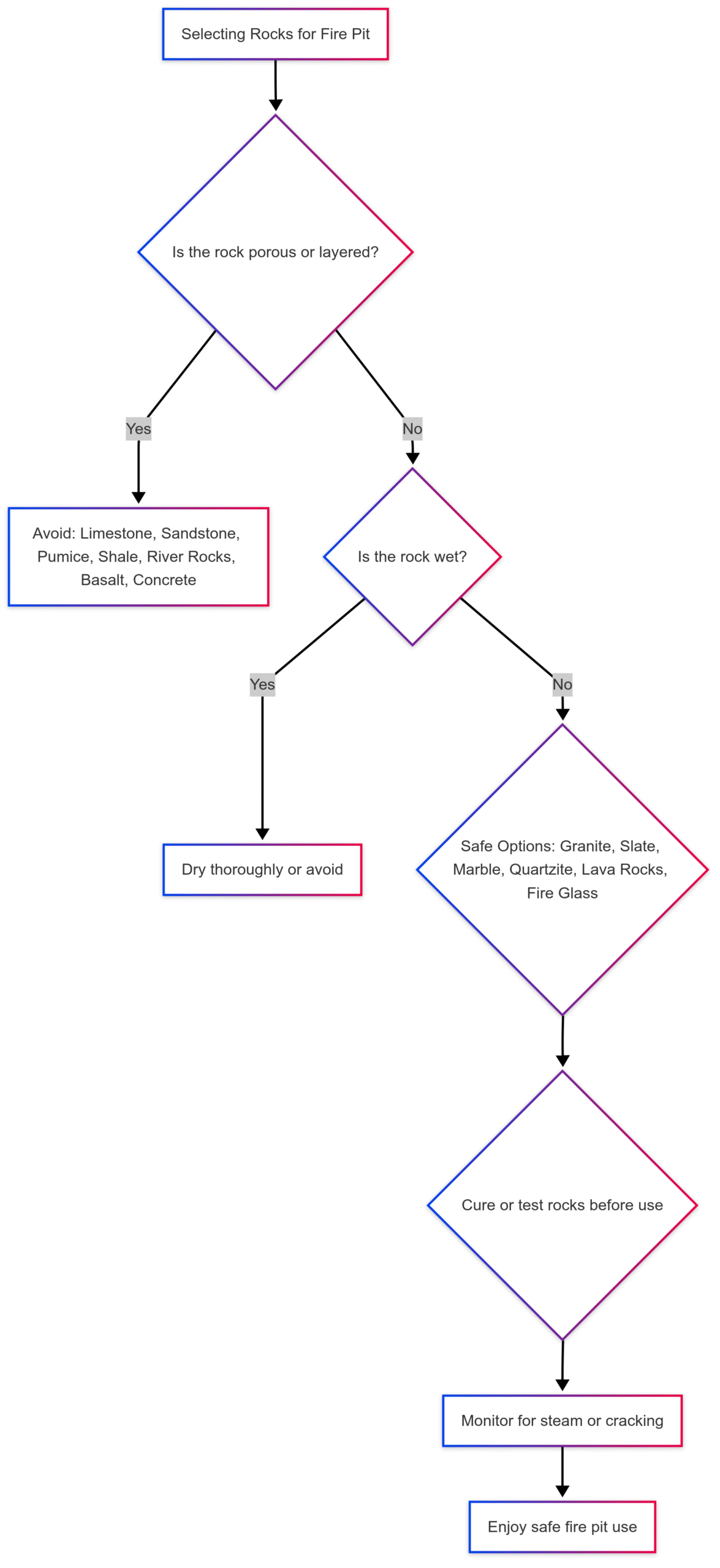
Chart: Fire Pit Rock Safety Decision Tree
Real-World Insights and Lessons
Social media discussions and camping forums reveal a mix of humor, caution, and hard-learned lessons about exploding rocks. One user shared a story of a river rock exploding like an “M80” firecracker during a rainy camping trip, scattering embers and prompting laughter after the shock subsided. Another described a rock splitting while cooking, ruining dinner and spraying coals across the campsite. These stories underscore the importance of awareness and preparation.
However, not all experiences are catastrophic. A seasoned camper noted that, despite using river rocks in fire pits for decades, they had only witnessed one minor “pop” rather than a violent explosion. This suggests that while the risk is real, its frequency may be overstated in some contexts. Nonetheless, the consensus remains: avoid porous or wet rocks to eliminate the chance of injury.
The Science of Safe Fire Pit Design
Beyond rock selection, the design and placement of your fire pit can enhance safety. Elevating the fire pit on a bed of sand or gravel can reduce heat transfer to surrounding rocks, minimizing the risk of thermal shock. Using pre-tested, fire-resistant rocks for the fire ring, as found in established campsites, is another practical approach. For cooking, flat slate or granite slabs are ideal, provided they are dry and heated gradually to avoid cracking.
Fire Pit Specifications and Costs
When investing in a fire pit, consider models designed with safety in mind. Below are examples of popular fire pit types and their specifications:
- Portable Steel Fire Pit: Lightweight, durable, and often equipped with a spark screen. Cost: $50–$200. Example: 30-inch diameter, 20-inch height, 15–25 pounds.
- Stone Fire Pit Kit: Pre-cut granite or slate blocks for easy assembly. Cost: $300–$1,000. Example: 36–48-inch diameter, includes base and ring stones.
- Gas Fire Pit with Lava Rocks: Uses propane or natural gas, eliminating the need for natural rocks. Cost: $200–$1,500. Example: 24–60-inch diameter, includes burner and lava rocks.
Bringing It All Together
A fire pit is more than just a source of warmth—it’s a gathering place that fosters connection and creates lasting memories. However, the danger of exploding rocks is a real concern that demands attention. By understanding why rocks explode, avoiding porous or wet rocks like limestone, sandstone, and river rocks, and choosing safe options like granite, slate, or manufactured lava rocks and fire glass, you can significantly reduce risks. Proper preparation, such as drying and curing rocks, combined with regular maintenance and thoughtful fire pit design, ensures your outdoor experience remains safe and enjoyable.
For those eager to learn more, consult resources like the Ultimate Fire Pit Guide or seek advice from professionals before selecting rocks. As the saying goes, “Common sense ain’t common,” so take the time to educate yourself and others to keep your fire pit a haven of warmth, not a source of hazard.
Disclaimer: This article is a general guide based on research and user experiences. Always consult a qualified professional, such as a geologist or fire pit expert, before selecting rocks for your fire pit. The author is not responsible for any incidents resulting from improper rock use.
Please share this Can fire pit rocks explode? your friends and do a comment below about your feedback.
We will meet you on next article.
Until you can read, How to Remove Yellow Stains from Hydrogen Peroxide